King Salman Chairs Cabinet Session, Reaffirms Saudi Support for Kuwait, Bahrain and Jordan
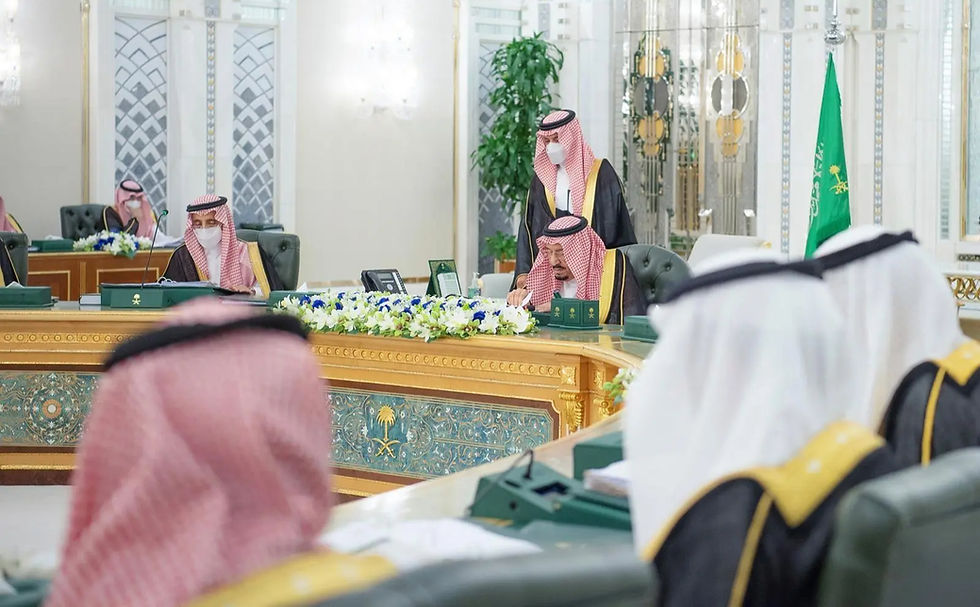
JEDDAH, July 21, Saudi Arabia Breaking News — Custodian of the Two Holy Mosques King Salman bin Abdulaziz Al Saud chaired the Cabinet session held in Jeddah on Tuesday.
The Cabinet was briefed on a telephone call received by His Royal Highness Prince Mohammed bin Salman bin Abdulaziz Al Saud, Crown Prince and Prime Minister, from Lebanese President Joseph Aoun.
During the call, Aoun expressed appreciation for Saudi Arabia’s support for Lebanon and the Kingdom’s efforts to promote regional peace and stability.
The Cabinet reviewed regional developments and their implications for international peace and security. It reaffirmed Saudi Arabia’s solidarity and full support for Kuwait, Bahrain and Jordan, as well as the measures taken by the three countries in response to Iranian attacks.
The Cabinet described the attacks as violations of international law and the principles of good neighbourliness and called for an immediate end to all military escalation to protect regional stability and civilian populations.
Minister of Human Resources and Social Development and Acting Minister of Media Ahmed Al-Rajhi said the Cabinet also reviewed the outcomes of Saudi Arabia’s international participation.
It praised national efforts during the 2026 United Nations High-Level Political Forum and noted progress presented in the Kingdom’s third Voluntary National Review on the Sustainable Development Goals.
The report highlighted advances in water security, renewable energy, access to healthcare, digital government, industrial development and inclusive economic growth.
The Cabinet also reviewed the Kingdom’s participation in the UN General Assembly’s High-level Meeting on the New Urban Agenda. It highlighted progress in sustainable urban development, including higher homeownership rates among Saudi families, increased public space per capita, modernised transport systems and greater community participation in urban planning.
The session examined reports and indicators concerning the national economy and the impact of government reforms on growth. The Cabinet noted that Saudi Arabia’s annual inflation rate remained stable at 1.8%, a relatively low level compared with many advanced and emerging economies.
It also welcomed the Kingdom’s rise to 13th place globally among the largest recipients of foreign direct investment in 2025, according to the United Nations Conference on Trade and Development.
Net FDI inflows increased by 53% to $32.6 billion, supported by investment across energy, infrastructure, technology, advanced industries and logistics.
The Cabinet reviewed the contribution of Saudi ports to regional and international trade, including the launch and expansion of logistics centres at Jeddah Islamic Port. The projects are intended to strengthen supply-chain integration between transport networks and economic and industrial zones under the National Transport and Logistics Strategy and Saudi Vision 2030.
The Cabinet issued several decisions, including authorising negotiations on agreements covering police training and research with the Maldives, political consultations with Australia, museum cooperation with Jordan and technical barriers to trade with China.
It approved agreements between the Saudi Arabia Financial Investigations Unit and the Ethiopian Financial Intelligence Service on exchanging information related to money laundering, associated crimes and terrorist financing.
The Cabinet also approved cooperation agreements between the Saudi Space Agency and the United Nations on the peaceful use of outer space, and between Saudi Arabia’s National Center for Non-Profit Sector and Qatar’s Regulatory Authority for Charitable Activities.


